Report


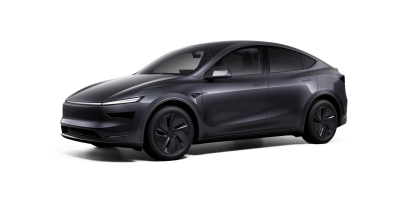
TESLA MODEL Y
Base Safety Equipment Rating
2026

Adult Occupant

93%
Child Occupant

89%
Vulnerable Road User

75%
Safety Assist
71%
AEB City
4 Pts
Performance:
| System Name | 避撞輔助(Collision Avoidance Assist) |
|---|---|
| Type | Auto-Brake |
| Operational From | 5 km/h |
| Additional Information | Default on for every journey(Preconditions: Pass) Minimum requirements to turn off AEB(Preconditions: Pass) |
Comments
- After TESLA MODEL Y model were conducted 4 TNCAP impact tests, the results are as follows:
(1) For "Offset Deformable Barrier Frontal Impact Tests", the driver and passenger have "Good" protection in all body parts and get full points.
(2) For "Full Width Frontal Impact Tests", the driver and passenger have "Good" or "Adequate" protection in all body parts.
(3) For "Side Impact Mobile Deformable Barrier Tests", important body parts have "Good" or "Adequate" protection.
(4) Under more severe test conditions of the "Oblique Pole Side Impact Tests", the driver's chest protection is rated as "Marginal", and other important body parts have "Good" or "Adequate" protection. However, the side curtain airbag failed to deploy correctly, affecting the head protection for the front passenger, therefore points were deducted in both side and oblique pole side impact tests.
(5) After completing the 4 crash tests, this vehicle model met the post-collision electric shock protection requirements, effectively reducing the risk of electric shock to occupants and rescue personnel. Therefore, it was awarded the compliance label for electric shock protection.
(6) This vehicle model has rescue sheet in both Chinese and English version for rescue personnel's reference during emergency operations. In addition, after the impact test, the doors could be opened manually, and the seatbelts could be released normally. - In the front seat and rear seat whiplash tests, the front seat and rear seat have "Good" protection for the occupant's neck.
- This vehicle model has a standard-fit autonomous emergency braking system, which performed well with collisions avoided in all City test scenarios. Furthermore, whiplash performance of front seat was rated "Good" protection. Therefore, the AEB City gets full points.
Vulnerable Road User
Total 36.112 / 75%
GOOD
ADEQUATE
MARGINAL
WEAK
POOR
NOT AVAILABLE
Pedestrian
24.512 Pts
HEAD IMPACT
18.046 Pts
PELVIS IMPACT
0.699 Pts
LEG IMPACT
5.767 Pts
VRU Impact Mitigation
11.6 Pts
Performance:
| System Name | 避撞輔助(Collision Avoidance Assist) |
|---|---|
| Type | Auto-Brake with Forward Collision Warning |
| Operational From | 5 km / h |
Additional Information |
Default on for every journey(Preconditions: Pass) Minimum requirements to turn off AEB/FCW(Preconditions: Pass) |
AEB Pedestrian
5.6 Pts
Performance:
Day time
Night time
AEB Cyclist
6 Pts
Performance:
Comments
- TESLA MODEL Y model is equipped with an active hood system that operates in accordance with requirements for different pedestrian statures and vehicle speeds. Therefore, pedestrian head impact tests were conducted with the hood in the deployed position. As the headform impacted at vehicle's hood, most of the area has rated as "Good" protection. Only vehicle's A-pillar and the lower edge of the windshield, the head protection performance was rated as "Weak" or "Poor". For the pelvis impact test, part of front structure of the vehicle caused larger impact force on the pedestrian's femur and pelvis, which is rated as "Weak" or "Poor" protection. For the leg impact test, the front bumper of the vehicle is rated as "Good" or "Adequate" protection on the pedestrian's legs.
- This vehicle model has a standard-fit autonomous emergency braking system. In vulnerable road user test scenarios, all the functions of human machine interface meet the protocol and 9 test results are as below.
(1) Car-to- Pedestrian Farside Adult (50%) tests, the system performed well to avoid all collisions between 20km/h to 60km/h.
(2) Car-to-Pedestrian Nearside Adult (25%) tests (including night), the system performed well to avoid all collisions between 20km/h to 60km/h.
(3) Car-to-Pedestrian Nearside Adult (75%) tests (including night), the system performed well to avoid all collisions between 20km/h to 60km/h.
(4) Car-to-Pedestrian Nearside Child (50%) tests, the system performed well to avoid all collisions between 20km/h to 60km/h.
(5) Car-to-Pedestrian Longitudinal Adult (50%) tests (including night), the system performed well to avoid all collisions between 20km/h to 60km/h.
(6) Car-to-Pedestrian Longitudinal Adult (25%) tests, the FCW system meets the warning requirements between 50km/h to 80km/h for day scenario. However, the FCW system does not meet the warning requirements between 50km/h to 80km/h for night scenario.
(7) Car-to-Bicyclist Nearside Adult (50%) tests, the system performed well to avoid all collisions between 20km/h to 60km/h.
(8) Car-to-Bicyclist Longitudinal Adult (50%) tests, the system performed well to avoid all collisions between 25km/h to 60km/h.
(9) Car-to-Bicyclist Longitudinal Adult (25%) tests, the system meets the warning requirements between 50km/h to 80km/h.
Safety Assist
Total 10.713 / 71%
GOOD
ADEQUATE
MARGINAL
WEAK
POOR
NOT AVAILABLE
Speed Assistance
0.25 Pts
Performance:
| System Name | 車速輔助(Speed Assist) |
|---|---|
| Speed Limit Information Function | Map based |
| Speed Control Function | System advised |
- Not Applicable
Occupant Status Monitoring
2 Pts
Performance:
Seatbelt Reminder
2 Pts
Performance:
| Applies To | All seats | ||
|---|---|---|---|
| Warning | Driver Seat | Front Passenger(s) | Rear Passenger(s) |
| Occupant Detection | |||
| Visual | |||
| Audible | |||
- Pass
- Fail
- Not Applicable
Driver Monitoring
0 Pts
Performance:
Lane Support
4 Pts
Performance:
| System Name | 車道偏離輔助(Lane Assist) |
|---|---|
| Type | LKA(IncludingLDW)andELK |
| Operational From | 48 km/h |
| Additional Information | Lane Departure Warning(Scoring Conditions: Pass) Blind spot monitoring(Scoring Conditions: Pass) |
| Performance | |
|---|---|
| Emergency Lane Keeping | GOOD |
| Lane Keep Assist | GOOD |
| Human Machine Interface | GOOD |
AEB Inter-Urban
2.463 Pts
Performance:
| System Name | 避撞輔助(Collision Avoidance Assist) |
|---|---|
| Type | Autonomous Emergency Braking and Forward Collision Warning |
| Operational From | 5 km/h |
| Additional Information | Default on for every journey(Preconditions: Pass) Minimum requirements to turn off AEB/FCW(Preconditions: Pass) Audiovisual warning(Preconditions: Pass) Supplementary warning (Scoring Conditions:Fail) Seatbelt activation(Scoring Conditions: Fail) |
Autobrake function only
Driver reacts to warning
BSS
2 Pts
Performance:
| System name | 盲點偵測輔助 |
|---|---|
| Functionality | Blind Spot Detection and Blind Spot Visualization |
| Operational From | 1 km/h |
| Warning | BSD Visual;BSV Real-Time Camera View |
Comments
- TESLA MODEL Y has a standard-fit speed assistance system which only meets the speed limit information warning requirements. However, the system is unable to effectively recognize traffic signs related to speed limit information along the route, time, weather, and vehicle category, and it also fails to adopt updated speed limit values within the specified time. Therefore, no score is awarded for this item.
- Both front and rear seats are equipped with a standard-fit seatbelt reminder, the system can effectively alert driver through audiovisual warnings. Therefore, the SBR gets full points. However, it is not equipped with driver state monitoring system, no point was awarded for this item.
- When the vehicle drifts from the driving lane, the lane support system (LSS) can alert and automatically intervene to correct the driving direction to the original driving path. Furthermore, all the functions of human machine interface meet the protocol. Therefore, the LSS gets full points.
- This vehicle model is equipped with a standard-fit autonomous emergency braking system, which is rated as "Good" protection in high-speed performance tests. However, part of the functions of human machine interface do not meet the protocol, therefore, the score for this item was deducted. 3 test results are as below:
(1) Car-to-Car Rear Stationary (CCRs) of FCW tests, the vehicle performed well to avoid all collisions.
(2) Car-to-Car Rear Moving (CCRm) of FCW tests, the FCW system meets the warning requirements. For AEB tests, collision occurred only at 60km/h on the left front (50% overlap) of the vehicle; however, the system can mitigate the degree of injury.
(3) Car-to-Car Rear Braking (CCRb) of FCW and AEB tests, the vehicle performed well to avoid all collisions. - The vehicle is equipped as standard with a blind spot assist system, including blind spot detection and blind spot visualization functions. When a motorcycle enters the blind spot area, the system effectively provides visual warnings and displays corresponding images; therefore, full points are awarded for the blind spot assist system.