Report


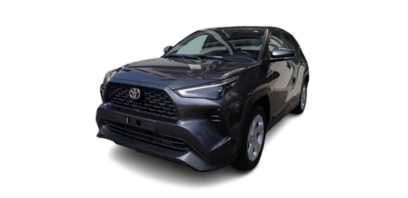
TOYOTA YARIS CROSS
Base Safety Equipment Rating
2025
Adult Occupant

80%
Child Occupant

71%
Pedestrian

82%
Safety Assist

66%
Specifications
| Tested Model | TOYOTA YARIS CROSS |
|---|---|
| Body Type | SUV |
| Year Of Publication | 2025 |
| Kerb Weight | 1125 kg |
| VIN From Which Rating Applies | Reference Rating Validity |
Safety Equipment
| Driver | 1st row passenger |
2nd row outboard |
2nd row center |
|
|---|---|---|---|---|
| FRONTAL CRASH PROTECTION | ||||
| Front Airbag | ||||
| Belt Pretensioner | ||||
| Belt Loadlimiter | ||||
| Knee Airbag | ||||
| LATERAL CRASH PROTECTION | ||||
| Side Head Airbag | ||||
| Side Chest Airbag | ||||
| Side Pelvis Airbag | ||||
| CHILD PROTECTION | ||||
| ISOFIX | ||||
| Integrated Child Seat | ||||
| Airbag cut-off switch | ||||
| SAFETY ASSIST | ||||
| Seatbelt Reminder | ||||
| OTHER SAFETY SYSTEMS | ||||
| Active Bonnet | ||||
| AEB Pedestrian | ||||
| AEB City | ||||
| AEB Interurban | ||||
| Speed Assistance | ||||
| Lane Assist System | ||||
| Blind Spot Monitoring | ||||
|
Note: Other equipment may be available on the vehicle but was not considered in the test year.
|
||||
Rating Validity
Variants of Model Range
| Item | Model Name | Body Type | Engine | Drivetrain | Rating Applies |
|---|---|---|---|---|---|
| 1 | 享樂版(受驗車款) | SUV | 1496c.c.汽油 | 4X2 | |
| 2 | 酷動版 | SUV | 1496c.c.汽油 | 4X2 | |
| 3 | 潮玩版 | SUV | 1496c.c.汽油 | 4X2 |
- Applicable
- Not Applicable
Tested variant
| Name of Commercial Vehicle Model | 享樂版 |
|---|---|
| Date of Purchase | 2025-04 ~ 2025-05 |
| Date of Production | 2025-03 ~ 2025-05 |
| Maker | Taiwan |
Adult Occupant
Total 30.515分 / 80%
GOOD
ADEQUATE
MARGINAL
WEAK
POOR
Frontal Offset Deformable Barrier
5.878 Pts
Frontal Full Width
7.376 Pts
Lateral Impact
15.183 Pts
Whiplash Rear Impact
2.078 Pts
AEB City
0 Pts
| System Name | PCS預警式防護系統(Toyota Safety Sense功能之一) |
|---|---|
| Type | Auto-Brake |
| Operational From | AEB 4 km/h |
| Additional Information | Default on for every journey(Preconditions: Pass) Minimum requirements to turn off AEB(Scoring Conditions: Pass) |
Comments
- After TOYOTA YARIS CROSS model were conducted four TNCAP impact tests, the results are as follows:
(1) For "Offset Deformable Barrier Frontal Impact Tests", the driver's chest and right upper leg protection is rated as "Marginal", other important body parts have "Good" or "Adequate" protection. The passenger's left and right upper leg protection is rated as "Marginal", other important body parts have "Good" or "Adequate" protection.
(2) For "Full Width Frontal Impact Tests", the driver's chest protection is rated as "Marginal", other important body parts have "Good" protection. All body parts of the rear passenger have "Good" or "Adequate" protection.
(3) For "Side Impact Mobile Deformable Barrier Tests", all important body parts have "Good" protection and get full points.
(4) Under more severe test conditions of the "Oblique Pole Side Impact Tests", the driver's chest protection is rated as "Marginal", other important body parts have "Good" protection. - In the front seat and rear seat whiplash tests, the front seat has "Marginal" protection for the occupant's neck. The rear seat has "Good" protection for the occupant's neck.
- This vehicle model has a standard-fit autonomous emergency braking system, which performed well with collisions avoided in all AEB City test scenarios. However, as the front seat whiplash protection performance did not achieve a “Good” rating, no points are awarded for the AEB City system.
Child Occupant
Total 34.905分 / 71%
GOOD
ADEQUATE
MARGINAL
WEAK
POOR
Crash Test Performance based on 6 & 10 year old children
17.572 Pts
Frontal Impact
9.572 Pts
Lateral Impact
8 Pts
Restraint for 6 year old child:TOYOTA JUNIOR SEAT2
Restraint for 10 year old child:TOYOTA JUNIOR SEAT2
Safety Features
8 Pts
| 2nd row outboard | 2nd row center | 3th row outboard | 3th row center | |
|---|---|---|---|---|
| ISOFIX | ||||
| i-Size | ||||
| Integrated Child Protect | ||||
| Bag Release | ||||
- Fitted to the vehicle as standard
- Not fitted to the test vehicle but available as option
- Not Available
- Not Applicable
CRS Installation Check
9.333 Pts
- Install without problem
- Install with care
- Safety critical problem
- Installation not allowed
- Install without problem
- Install with care
- Safety critical problem
- Installation not allowed
- Install without problem
- Install with care
- Safety critical problem
- Installation not allowed
- Install without problem
- Install with care
- Safety critical problem
- Installation not allowed
- Install without problem
- Install with care
- Safety critical problem
- Installation not allowed
- Install without problem
- Install with care
- Safety critical problem
- Installation not allowed
- Install without problem
- Install with care
- Safety critical problem
- Installation not allowed
- Install without problem
- Install with care
- Safety critical problem
- Installation not allowed
- Install without problem
- Install with care
- Safety critical problem
- Installation not allowed
- Install without problem
- Install with care
- Safety critical problem
- Installation not allowed
- Install without problem
- Install with care
- Safety critical problem
- Installation not allowed
| SEAT POSITION | ||||||
|---|---|---|---|---|---|---|
| 2ND ROW | 3TH ROW | |||||
| Left | Centre | Right | Left | Centre | Right | |
| Nuna PRYM(後向) (i-Size) | ||||||
| Nuna PRYM(前向) (i-Size) | ||||||
| Nuna REBL plus (i-Size) | ||||||
| Chicco Auto-Fix Fast手提汽座 (ISOFIX) | ||||||
| Nuna REBL plus (ISOFIX) | ||||||
| Chicco Seat 4 Fix Isofix安全汽座 (ISOFIX) | ||||||
| TOYOTA/LEXUS JUNIOR SEAT2 (ISOFIX) | ||||||
| ABC design GmbH Risus (Seat Belt) | ||||||
| Nuna PIPA lite 提籃+底座 (Seat Belt) | ||||||
| Chicco Eletta寶貝舒適全歲段安全汽座 (Seat Belt) | ||||||
| PERO Luce90 (Seat Belt) | ||||||
- Install without problem
- Install with care
- Safety critical problem
- Installation not allowed
- Not Applicable
Comments
- After TOYOTA YARIS CROSS model were conducted impact tests for the 6-year-old and 10-year-old child dummies, the results are as follows:
(1) For "Offset Deformable Barrier Frontal Impact Tests", the 6-year-old child dummy's chest protection is rated as "Marginal", other important body parts have "Good" or "Adequate" protection. The 10-year-old dummy's neck protection is rated as "Marginal", other important body parts have "Good" protection. However the dummy was not effectively restrained as it moved forward and the seatbelt strap slipped from its shoulder, therefore the score is deducted.
(2) For "Side Impact Mobile Deformable Barrier Tests", important body parts have "Good" protection and get full points. - The car owner's manual clearly records the information on child restraint system applicable to the rear seat. Only the outer seats can be correctly installed with all types of child restraint system (universal, ISOFIX and i-Size) after being tested. However, the vehicle manufacturer does not recommend suitable child restraint system information for different age groups, therefore the recommended child restraint system installation item is not awarded the points. Besides, the vehicle is equipped with the function of installing i-Size child restraint system on the left and right seats of the second row with i-Size labels, it could also accommodate larger rear-facing child restraint system.
Pedestrian
Total 34.792 / 82%
GOOD
ADEQUATE
MARGINAL
WEAK
POOR
Pedestrian
30.659 Pts
HEAD IMPACT
19.074 Pts
PELVIS IMPACT
5.585 Pts
LEG IMPACT
6 Pts
AEB Pedestrian
4.133 Pts
| System Name | PCS預警式防護系統(Toyota Safety Sense功能之一) |
|---|---|
| Type | Auto-Brake with Forward Collision Warning |
| Operational From | 4 km / h |
| Additional Information | Default on for every journey(Preconditions: Pass) Minimum requirements to turn off AEB/FCW(Scoring Conditions: Pass) Audiovisual warning needs loud and clear and to be issued at least 1.2 seconds TTC(Scoring Conditions: Pass) Operates in low ambient light(Scoring Conditions: Pass) |
| Avoidance | Mitigation | |
|---|---|---|
| Running Adult crossing from Farside | Crash avoided at 35 Km/h | Impact mitigated up to 60 Km/h |
| Walking Adult crossing from Nearside -25% | Crash avoided at 40 Km/h | Impact mitigated up to 35 Km/h |
| Walking Adult crossing from Nearside -75% | Crash avoided up to 60 Km/h | |
| Running Child from behind parked vehicles | Crash avoided up to 25 Km/h | Impact mitigated up to 40 Km/h |
- Not Applicable
Comments
- After TOYOTA YARIS CROSS model were conducted headform impact tests of pedestrian protection tests, as the headform impacts at vehicle's A-pillar and its adjacent areas of the windshield, the head protection performance is rated as "Weak" or "Poor", and the rest of the hood areas are rated as "Good" or "Adequate" protection. For the pelvis impact test, the front structure of vehicle is rated as "Good" or "Adequate" protection on the pedestrian's femur and pelvis. For the leg impact test, the front bumper of the vehicle is rated as "Good" protection on the pedestrian's legs and gets full points.
- This vehicle model has a standard-fit autonomous emergency braking system. In vulnerable road user test scenarios, all the functions of human machine interface meet the protocol and 4 test results are as below:
(1) Car-to-VRU Farside Adult (50%) tests, the vehicle performed well to avoid collision at 35km/h. However, collisions occurred between 20km/h to 30km/h and 40km/h to 60km/h, and the system can mitigate the degree of injuries.
(2) Car-to-VRU Nearside Adult (25%) tests, the vehicle performed well to avoid collision at 40km/h. However, collisions occurred between 20km/h to 35km/h, the system can mitigate the degree of injuries but the system cannot effectively mitigate the degree of injuries between 45km/h to 60km/h.
(3) Car-to-VRU Nearside Adult (75%) tests, the system performed well to avoid all collisions between 20km/h to 60km/h.
(4) Car-to-VRU Nearside Child (50%) tests, collisions occurred between 30km/h to 40km/h, and the system can mitigate the degree of injuries. However, the system cannot effectively mitigate the degree of injuries between 45km/h to 60km/h.
Safety Assist
Total8.024 / 66%
GOOD
ADEQUATE
MARGINAL
WEAK
POOR
Speed Assistance
0 Pts
Seatbelt Reminder
3 Pts
| Applies To | All seats | ||
|---|---|---|---|
| Warning | Driver Seat | Front Passenger(s) | Rear Passenger(s) |
| Visual | |||
| Audible | |||
- Pass
- Fail
- Not available
Lane Support
2.7 Pts
| System Name | 車道行駛輔助系統(Toyota Safety Sense功能之一) |
|---|---|
| Type | Lane Keep Assist and Lane Departure Warning |
| Operational From | LKA 50 km/h;LDW 50 km/h |
| Warning | Audible and Visual |
| Additional Information | Default on for every journey(Scoring Conditions: Pass) Haptic warning(Scoring Conditions: Fail) Blind spot monitoring(Scoring Conditions: Fail) |
| Performance | |
|---|---|
| LKA confirmation test | Pass(5/5) |
| LDW confirmation test | Pass |
AEB Inter-Urban
2.324 Pts
Performance:
GOOD
| System Name | PCS預警式防護系統(Toyota Safety Sense功能之一) |
|---|---|
| Type | Forward Collision Warning with Auto-Brake |
| Operational From | AEB 4 km/h;FCW 4 km/h |
| Additional Information | Default on for every journey(Preconditions: Pass) Audiovisual warning(Preconditions: Pass) Minimum requirements to turn off AEB/FCW(Scoring Conditions: Pass) Supplementary warning(Scoring Conditions: Fail) Seatbelt activation(Scoring Conditions: Fail) |
| Autobrake Function Only | Driver reacts to warning | |
|---|---|---|
| Operational speed | 4-120 km/h | 4-120 km/h |
| Approaching a stationary car | See AEB city | Crash avoided up to 70 km/h. |
| Approaching a slower moving car | Crash avoided up to 70 km/h. | Crash avoided up to 80 km/h. |
| Following a car at short distance | ||
|---|---|---|
| Car in front brakes gently | Mitigation | Mitigation |
| Car in front brakes harshly | Mitigation | Mitigation |
| Following a car at long distance | ||
|---|---|---|
| Car in front brakes gently | Mitigation | Mitigation |
| Car in front brakes harshly | Avoidance | Avoidance |
- Not Applicable
Comments
- TOYOTA YARIS CROSS is not equipped with speed assist system, and therefore no point is awarded for this item.
- Both front and rear seats are equipped with a standard-fit seatbelt reminder, the system can effectively alerts driver through audiovisual warnings. Therefore, the system gets full points.
- When the vehicle drifts from the driving lane, the lane support system can alert and automatically intervene to correct the driving direction to the original driving path. However, part of the functions of human machine interface do not meet the protocol, therefore, the score for this item is deducted.
- This vehicle model is equipped with a standard-fit autonomous emergency braking system, which is rated as "Good" protection in high-speed performance tests. However, part of the functions of human machine interface do not meet the protocol, therefore, the score for this item is deducted. 3 test results are as below:
(1) Car-to-Car Rear Stationary (CCRs) of FCW tests, collision occurred between 75km/h to 80km/h, however, the system can mitigate the degree of injuries.
(2) Car-to-Car Rear Moving (CCRm) of FCW tests, the vehicle performed well to avoid all collisions between 50km/h to 80km/h. For AEB test scenario, the vehicle performed well to avoid all collisions between 30km/h to 70km/h.
(3) Car-to-Car Rear Braking (CCRb) of FCW and AEB tests, collision occurred at 12m and 40m headway with decelerations of 2m/s², 12m headway with decelerations of 6m/s², however, the system can mitigate the degree of injuries.